Illustration system / Confidential client since 2019
A custom illustration system built to scale for a global science and philanthropy organization. Built for inclusion.
Our longest active partnership began in 2019 with a confidential client whose work spans science, education, technology, and community. They needed a custom illustration style that could unify those wide-ranging initiatives under one cohesive visual language. It needed to represent the full diversity of the communities they serve, not as an afterthought, but as the foundation the system was built on.
We researched and developed a comprehensive framework for inclusive illustration. That meant going well beyond skin tone. We considered body weight and size, physical ability, age, hair texture, clothing, cultural background, religion, gender expression, and neurodiversity. We developed guidelines around how people interact with each other and their environments, how to break rather than reinforce stereotypes, and why to use realistic rather than abstracted skin tones. We built a bias checklist that the organization's internal teams use to evaluate every new illustration created from the system. The result is a toolkit that doesn't just look inclusive, it's designed to stay that way.
DEI Research and Framework / Bias Checklist and Usage Guidelines / Illustration Strategy / Custom Illustration System / Figma Asset Library / Brand Guidelines / Animation
Key qualities of the illustration style
Texture & Color
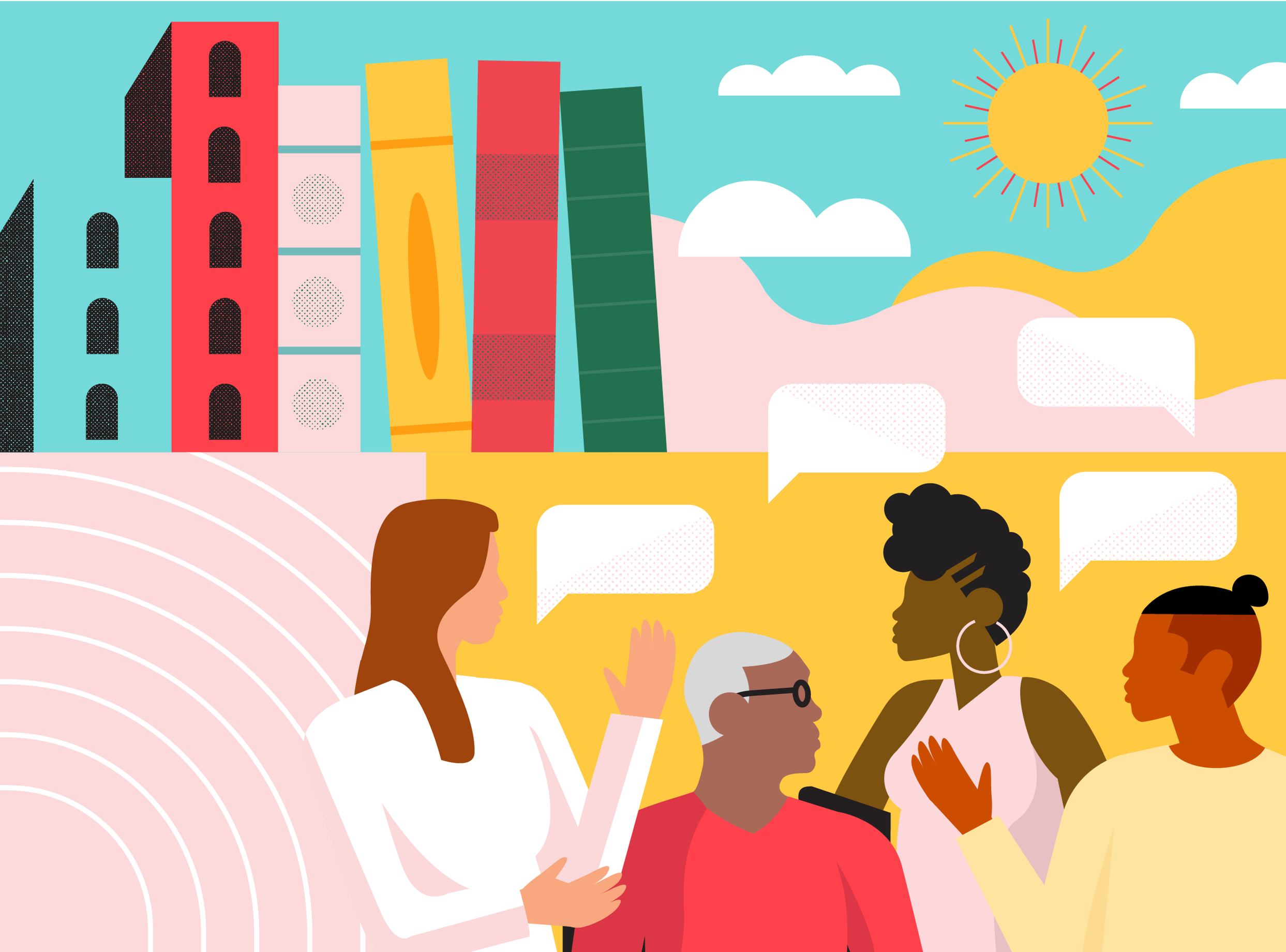
Because geometric forms can often feel cold and flat, we introduced halftones to add warmth and nostalgia, shadows, and depth. A limited color palette keeps illustrations cohesive and optimistic.
Geometric forms
The majority of the illustration assets are based on geometric shapes. This gives a nod to the tech and science part of the brand, and works well with the modular layouts.
A community of real people
Each illustration tells a story, and the people in it have purpose. Diversity across gender, body type, ability, sexual orientation, religion, and more is considered in each illustration so that the community is representative of as many people as possible.
Adaptable + functional
We developed a full library of customizable assets (people, objects, scenery) that can be rearranged to create new compositions. The modular layout style allows many concepts to come together and adapt to any size.

The Challenge
The client's work spans science, education, technology, and community. One organization, many initiatives, one visual language to hold it all together. The system had to be flexible enough to work across every department and expressive enough to feel human rather than corporate. And it had to do something most illustration systems don't even attempt: represent everyone.
A Custom Illustration System Built for Scale
The system is built on modular, geometric forms that can be rearranged to create new scenes without starting from scratch. Characters, objects, environments, scene components, all designed to work together and adapt to any format. Internal teams can generate new illustrations quickly while staying within the visual language. The system grows because it was designed to.




Visual Style & Art Direction
Geometric forms give the system its structure, a visual language that nods to science and technology without feeling cold. Halftone textures, shadows, and a limited color palette add warmth and depth. The result is something that looks like it belongs to this organization specifically, not like it came from a stock library.
Illustration for Inclusive Storytelling
Diversity in illustration is easy to get superficially right and hard to get meaningfully right. Putting different-looking people in the same scene isn't enough. We designed around how people interact with each other and their environments, who gets to be in what role, what body language signals, what assumptions get embedded in the composition. The DEI framework and bias checklist we built ensure that every new illustration created from the system holds to the same standard.
Our top 5 DEI learnings for inclusive illustration
-
![Illustration: Three women talking]()
01 General diversity
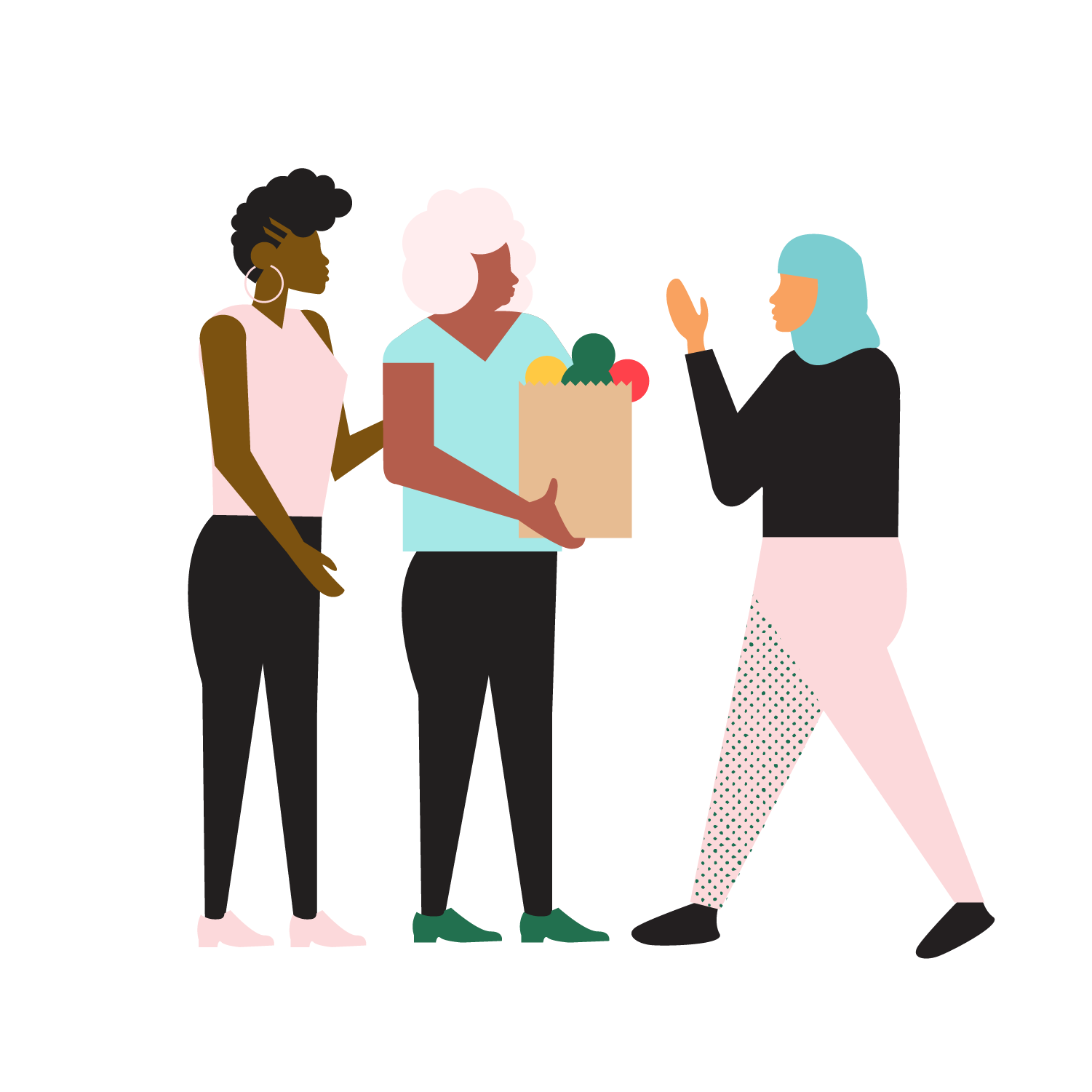
Consider different religions, cultural backgrounds, sexual orientations, income levels, education, and neurodiversity. This list is not exhaustive, nor are these aspects always possible to convey visually—however it is important to keep all types of diversity in mind when creating or choosing an illustration.
-
![Illustration: Woman in wheelchair, woman kneeling next to her]()
02 Physical diversity
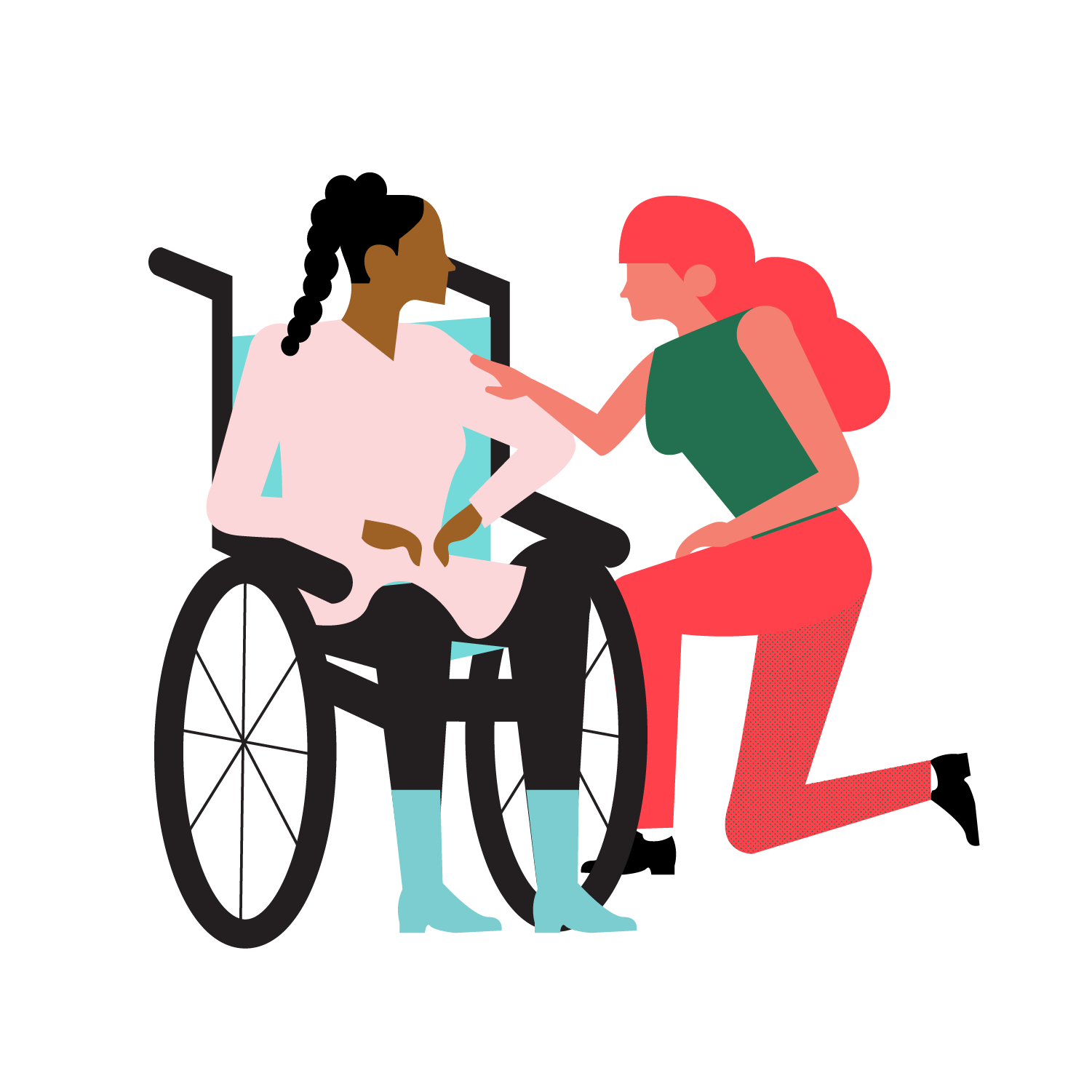
Rather than using generic or idealized body constructs, include a range of body types and abilities. Ability can range from the use of a wheelchair to a hearing aid. Also consider height, weight, race, hairstyle, age, clothing, and gender.
-
![Illustration: Male couple with kid on shoulders]()
03 Interactions and roles
It is not enough for people to look diverse in illustrations. They also need to be positively interacting with each other. Consider who is interacting with who, and how. Consider gender norms, body language, class, race, age, etc. Also consider how people interact with objects and environments.
-
![Illustration: POC medical professionals, man and woman]()
04 Break stereotypes
Depicting stereotypes reinforces the narrative, while breaking from stereotypes helps to redefine the narrative. Consider whether you are reinforcing any stereotypes—especially across gender, race, and ethnicity.
-
![Illustrations: Hands with varying skin tones and colors]()
05 Use real and varied skin tones
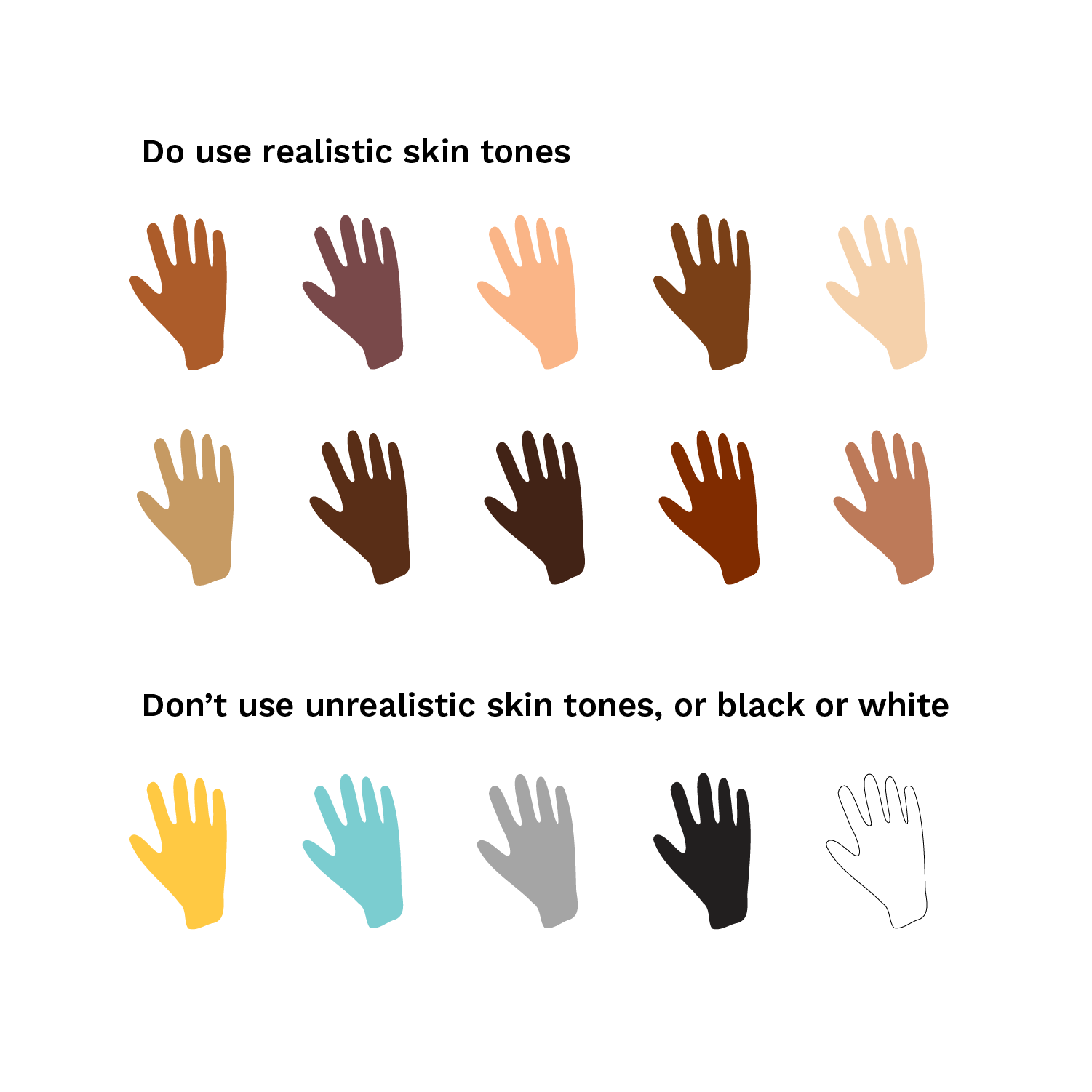
Avoid using stark white, black, or yellow as a skin tone: realistic skin tones achieve ethnic and racial diversity in a way that using unexpected (or branded) colors, such as purple and yellow, can’t. Using white or black is inadvisable as it creates an oversimplified dichotomy of racial and ethnic diversity.
-
![Illustration of woman using computer, with desk plant and speech bubbles]()
Further reading
Designing Adobe’s Brand Illustration Style
You Can’t Just Draw Purple People and Call It Diversity
Designing Inclusive Illustrations (or, A Brief History of the Meeple)
Brand Illustration Systems: Drawing a Strong Visual Identity
Building a Brand Illustration Style That (Finally) Pays Homage to the Gig Economy Workforce




DEI Illustration Guidelines & Use System
Diversity in illustration is easy to get superficially right and hard to get meaningfully right. Putting different-looking people in the same scene isn't enough. We designed around how people interact with each other and their environments, who gets to be in what role, what body language signals, what assumptions get embedded in the composition.
The usage guide we built gives internal teams the principles they need to keep creating inclusive visuals over time. Realistic and varied skin tones. A range of physical abilities and body types. Positive interactions across gender, age, culture, and class. No reinforced stereotypes. No default roles.
The system works because the guidelines are part of it, not separate from it.
Modular Asset FIGMA Library
The Figma library is what makes the system usable long-term. Character variations, environmental elements, scientific and educational objects, community settings, modular layout components. Internal teams can build new illustrations without starting from scratch, maintaining consistency without needing to call us for every new asset. That's the point.
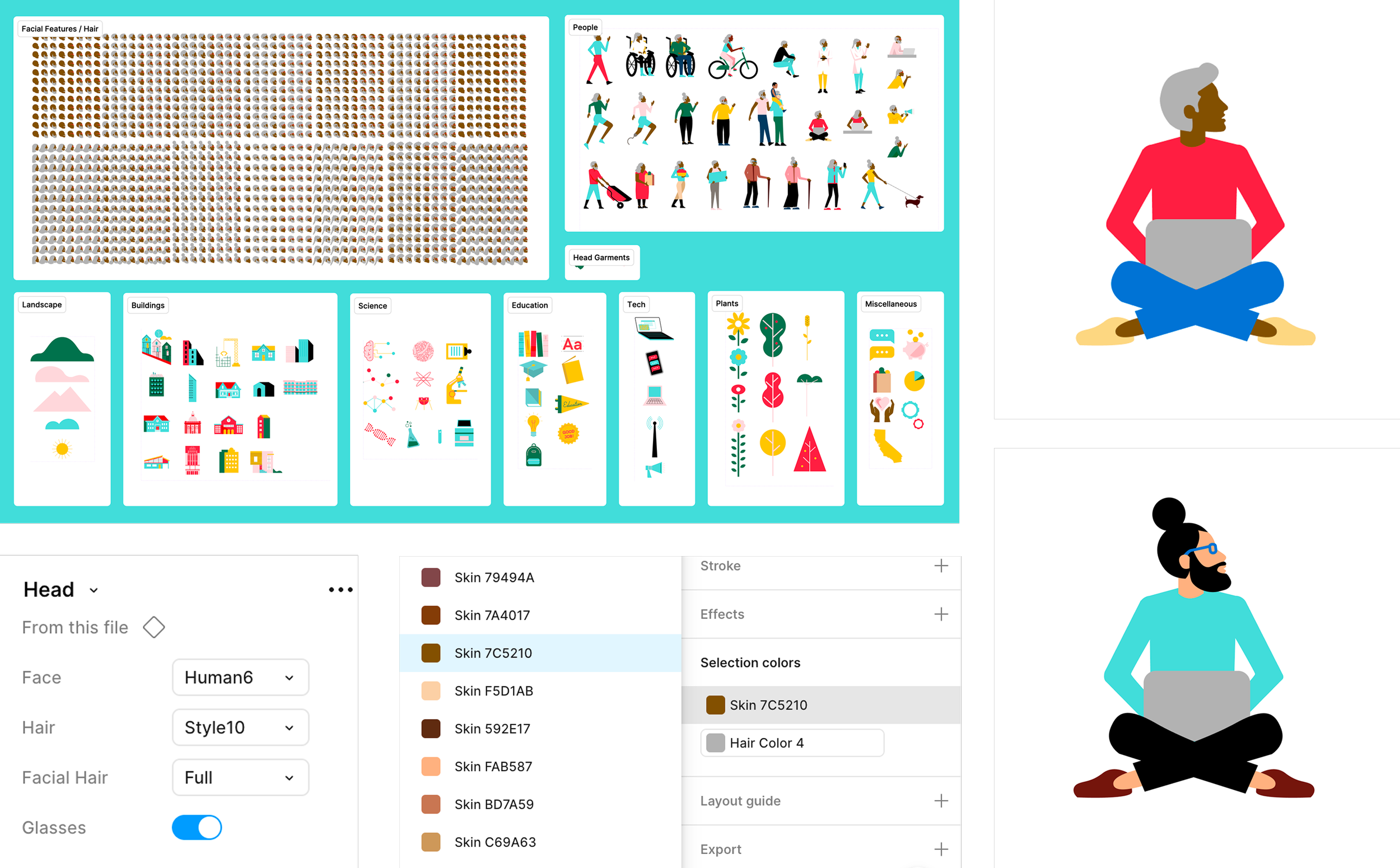
A glimpse into our comprehensive Figma illustration library.


Next project